Farthing
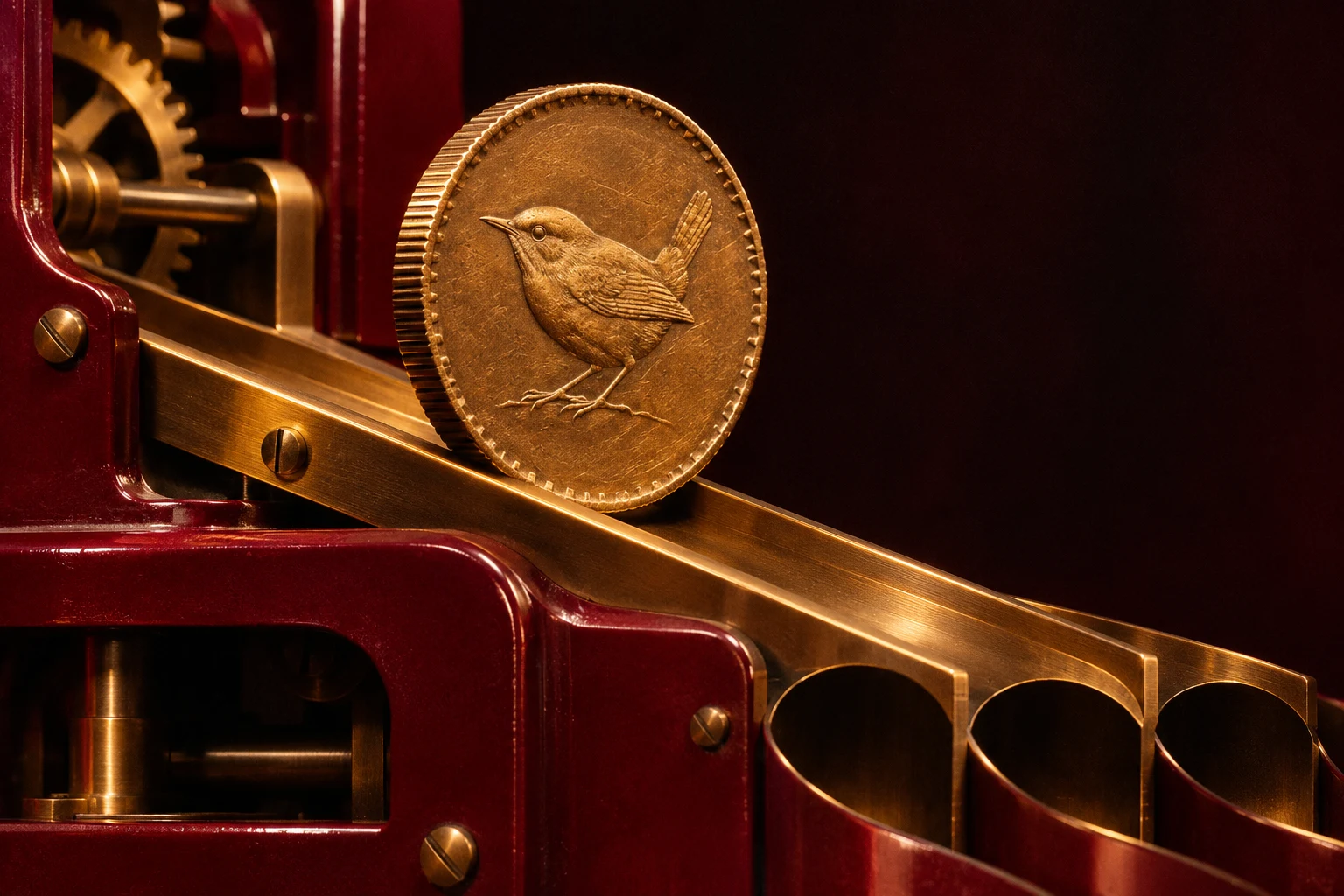
One loose unit.
Press has the largest fraction and takes the last unit.
The payout ledger.
Bring a batch of fee receipts. Set aside a reserve, choose recipients, and reconcile every atomic unit before anyone pays out.
Distribution statement
Identical receipt IDs count once. Conflicting amounts stop the batch. Recipient weights must sum to 10,000 basis points. The desk retains the reserve first, then splits the pooled balance once.
Units, ties & token role
All calculations use whole atomic units. After flooring each share, leftover units go to the largest residuals. Equal residuals use recipient row order. A blank address is a planning label. The desk sends no transfers.
RMDR is the proposed settlement unit for creator distributions, with 18 decimals used in this model. The token is unissued. Enter another asset and its actual decimals to reconcile an existing statement.
IDs are case-sensitive. Use unquoted CSV with the shown headers and no commas inside fields. The audit CSV includes deduplicated receipts, the retained amount, weights, addresses, floors, residual numerators and final atomic allocations.
The split desk.
Set the pool and the share for each desk. Use whole numbers.
The house method.
- Multiply the pool by each desk’s percentage. Divide by 100.
- Give each desk its whole units first. Rank the remaining fractions from largest to smallest.
- Award one extra unit at a time in that order. Equal fractions go to Press, then Studio, then Archive.
Try the one-unit tie. Both Press and Studio have a half-unit claim, so the published seat order gives Press the unit.
Independent Robinhood Chain concept. The example pool is fictional and stays in your browser.